 Big Book
13 November 2026 · 12 MIN READ
Alcoholic Anonymous Number Three: Big Book Reading Guide
Explore Alcoholic Anonymous Number Three with historical context, key themes, practical study suggestions, reflection questions and five FAQs for readers.
This article offers educational context and reflection prompts. It is not official A.A. guidance and does not replace a sponsor, meeting, healthcare professional or emergency support.
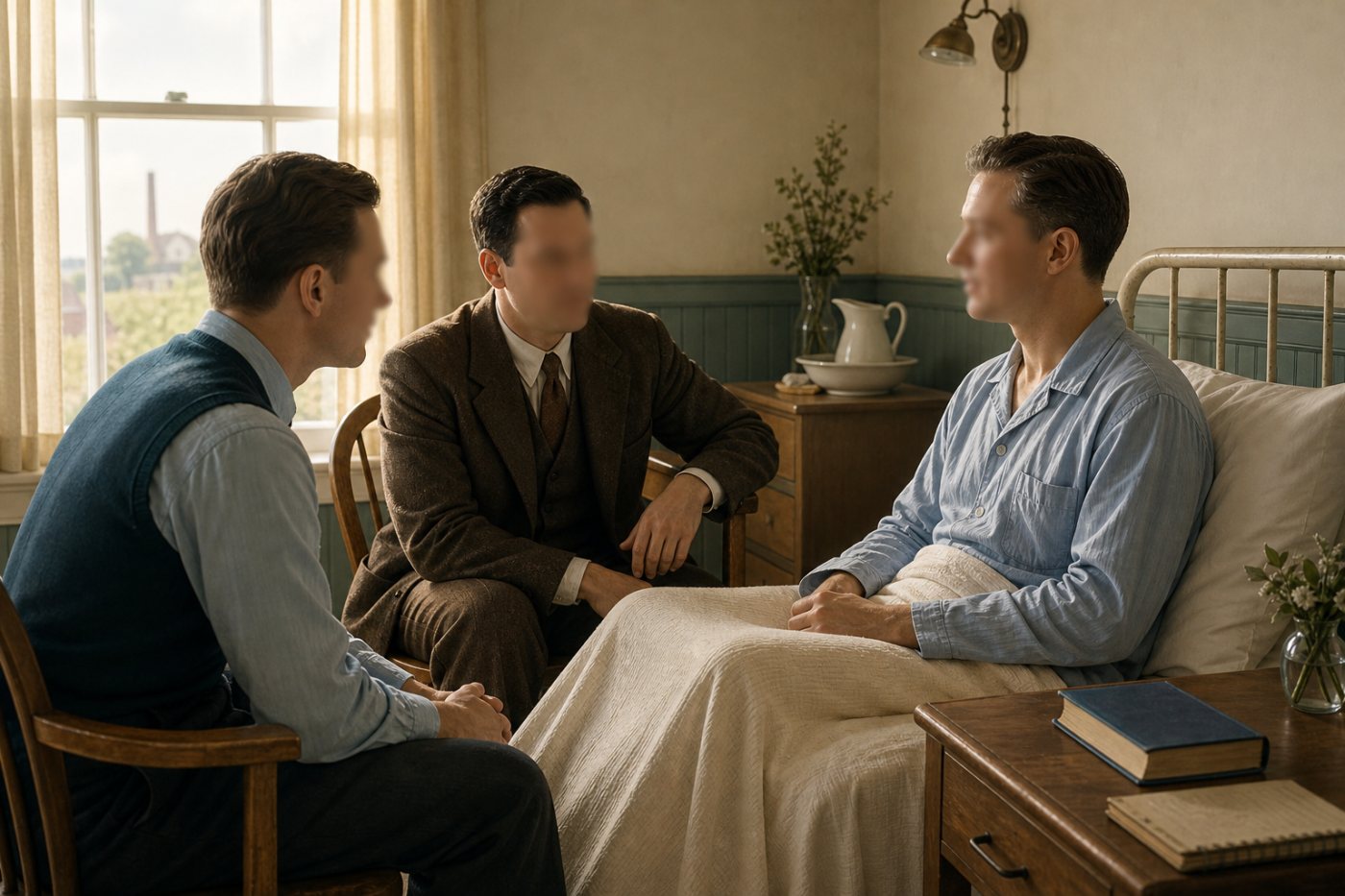
Alcoholic Anonymous Number Three is the Big Book personal story associated with Bill D., an Akron lawyer who met Bill W. and Dr. Bob in a hospital in June 1935. It is especially useful for studying early A.A. because it shows the emerging fellowship in action before its program had been fully organized or published: one person with a drinking problem speaking directly to another, willingness replacing repeated resolutions, attention narrowing to the present day, and help being carried forward.
The story appears in Part I, “Pioneers of A.A.,” after “Doctor Bob’s Nightmare.” In the Fourth Edition, it begins on page 182 and ends on page 192. The official text identifies its narrator as a pioneer of Akron’s first group and says that the group dated from his encounter with the co-founders. (aa.org)
This guide is an independent reading companion, not official A.A. guidance. Members and groups use the story in different ways, and no reader needs to force their experience, beliefs or vocabulary to match Bill D.’s account.
The Story at a Glance
| Part of the story | What happens | A useful reading question |
|---|---|---|
| Early life | Bill D. describes a stable upbringing, education and professional success alongside increasingly serious drinking. | Which assumptions about alcoholism does this background challenge? |
| Progression | Drinking disrupts work, health, finances and relationships despite repeated intentions to stop. | What is the difference between sincerely deciding and being able to follow through? |
| Hospital meeting | Bill W. and Dr. Bob visit and share their own experience rather than approaching him only as authorities. | Why does identification make Bill D. more willing to listen? |
| A new approach | He considers powerlessness, outside help, a Higher Power and a manageable period of 24 hours. | Which idea seems to reduce his resistance or fear? |
| Continuing action | He attends meetings, addresses harms, rebuilds relationships and tries to help others. | How does the story move from personal relief to participation and service? |
Historical Context: An Early Fellowship Taking Shape
Bill D.’s encounter with Bill W. and Dr. Bob took place on June 26, 1935, shortly after Dr. Bob’s last drink on June 10. According to the story, Bill D. had been hospitalized repeatedly during the first half of that year and had again reached the hospital determined to stop for a limited period. His earlier resolutions had not lasted. (aa.org)
The two visitors did not yet have the Big Book, a published Twelve Step program or an established worldwide organization. Bill D. describes receiving an early version of the approach that would later be known as Alcoholics Anonymous. The story therefore lets readers observe several foundational practices before they had familiar names:
- Sharing personal drinking experience to establish identification
- Asking whether the person wants help rather than imposing it
- Acknowledging an inability to manage the problem alone
- Seeking spiritual help as the individual understands it
- Reviewing personal conduct honestly
- Concentrating first on the immediate alcohol problem
- Carrying the same approach to another person
The editorial passage in the middle of the story briefly changes narrators. Bill W.’s recollection is inserted into Bill D.’s account, offering a second perspective on the hospital visit. Notice that this section was written retrospectively. It does not function as a minute-by-minute transcript; it is a remembered account presented to explain the meaning early members later attached to the meeting.
For more background on the other Akron co-founder’s experience, read Doctor Bob’s Nightmare: History, Themes & Reflection.
A Careful Map of the Narrative
1. A conventional life does not prevent serious drinking
Bill D. begins by pushing against a simple explanation of his alcoholism. He recalls a financially secure childhood, loving parents, a happy marriage, education and professional achievement. His account does not identify one obvious childhood trauma or domestic grievance as the cause of his drinking.
This is significant because personal stories can easily become comparison exercises. A reader may think, “My childhood was different, so this story does not apply,” or “My consequences were less severe, so I do not belong in the discussion.” Bill D.’s opening suggests a more useful question: not whether every detail matches, but whether the patterns, loss of control or repeated failed intentions create recognition.
2. Progression appears in patterns, not one dramatic event
The narrative follows drinking from childhood experimentation through university, military service, Prohibition, professional life and repeated hospitalization. External circumstances sometimes restrict his access to alcohol, but they do not resolve the underlying pattern.
Several cycles become visible:
- Drinking produces serious consequences.
- Bill D. forms a sincere intention to stop.
- Time passes or circumstances change.
- Drinking resumes.
- The consequences become more severe.
The story’s force comes partly from repetition. A reader studying it slowly may mark each new resolution and what follows. This can reveal why the hospital conversation feels different: the visitors are not merely asking him to make another promise.
3. Shared experience opens the conversation
Bill D. initially resents learning that his wife has discussed his drinking with other people. His attitude changes when he hears that the visitors have personal experience of the same problem.
Bill W. and Dr. Bob discuss their own histories before presenting ideas. Bill D. concludes that they understand because their descriptions resemble realities he knows firsthand. The encounter illustrates a central principle of peer support: credibility may grow from recognition rather than status alone.
The visitors also leave room for choice. They ask whether he wants to stop and explain that they are looking for someone who both needs and wants the help. That distinction matters. Their approach is direct, but the story does not portray coercion as its foundation.
This scene pairs naturally with Working With Others: Themes from Big Book Chapter 7, which explores the later written guidance on carrying the message, practical boundaries and respect for another person’s readiness.
4. Twenty-four hours makes the problem feel approachable
Bill D. first imagines stopping for several months—long enough to repair finances and regain respect. His visitors reframe the question around staying away from alcohol for 24 hours.
This does not erase long-term consequences or guarantee what will happen next. Its practical value is a change in scale. An indefinite future feels overwhelming; the current day may feel more workable. Readers may recognize this as an early expression of the day-at-a-time outlook widely associated with A.A.
The passage can be read beyond slogan familiarity. Ask what changes in Bill D.’s thinking when the time frame becomes smaller. Does he receive a new argument, or does an old problem become possible to approach differently?
5. The story continues after the hospital
The hospital encounter is not presented as the end of the work. Bill D. describes continued meetings, spiritual practice, attention to personal failings, efforts to repair relationships and attempts to help others. Physical and financial improvement are gradual rather than immediate.
This protects the story from being reduced to a single dramatic conversion scene. Its broader structure is encounter, decision and continued participation. Hope begins in the hospital, but a different way of living develops through repeated action.
Central Themes to Study
Identification before instruction
The visitors earn Bill D.’s attention by showing that they understand his experience. Their personal credibility makes later suggestions easier for him to consider. In a group discussion, it may be useful to distinguish identification from comparison: identification looks for shared patterns, while comparison can focus narrowly on whose consequences were worse.
Willingness rather than certainty
Bill D. does not leave the hospital with complete confidence in himself. He does become willing to try the approach fully. The story repeatedly separates certainty from willingness; the latter is enough to begin.
Spiritual language in historical context
The story uses direct Christian and God-centered language. That language reflects Bill D.’s beliefs and the religious setting of many early members. Some readers find it natural and encouraging; others experience distance, disagreement or discomfort.
A careful reading need not erase either response. Readers can ask what function the language serves in the narrative. For Bill D., it expresses reliance beyond self-will, gratitude, direction and a sense that help is available. Different members and groups may interpret Higher Power language differently, and no personal story can settle another reader’s spiritual understanding for them.
Concentrating on the primary problem
Bill D. worries that he must correct several habits at once. His visitors suggest focusing first on drinking because it is causing the most urgent difficulty. This is not a declaration that every other behavior is harmless. It is an example of prioritization: an overwhelmed person may be better able to act when the immediate task is clear.
Gratitude expressed through action
By the end, gratitude is not only a feeling. It appears through meetings, restored contact with others and the effort to pass help onward. The story presents service as both a response to receiving help and part of Bill D.’s continuing practice.
Medical Safety and the Hospital Setting
Bill D.’s story includes repeated hospitalization, severe intoxication and symptoms described in the language of the period. It should not be treated as a modern medical protocol or as evidence that another person can safely stop drinking without clinical assessment.
Suddenly stopping after prolonged heavy drinking can cause potentially life-threatening withdrawal. NIAAA advises seeking medical help to plan a safe withdrawal, particularly because complications can include a rapid heart rate, seizures and other serious problems. (niaaa.nih.gov) If someone may be experiencing a medical emergency, emergency services or urgent medical care are more appropriate than relying on literature, a meeting or peer support alone.
Fellowship practice and medical care can have different roles. Reading, meetings and sponsor conversations may offer peer support, while withdrawal assessment, diagnosis and treatment belong with qualified health professionals.
A Practical Study Method
First reading: follow the story
Read without highlighting every sentence. Note only the major turning points: progression, hospital admission, identification, willingness, the 24-hour idea and continuing action.
Second reading: mark changes in perspective
Use three simple symbols:
- R for resistance or rationalization
- I for identification or recognition
- A for a decision followed by action
A restrained marking system usually makes later review easier. See Big Book Highlights: What to Mark and How to Revisit It for additional approaches.
Third reading: separate the voices
Mark where Bill D. narrates and where the editors introduce Bill W.’s recollection. Ask what each perspective contributes. Bill D. emphasizes what he heard and decided; Bill W.’s section emphasizes the observers’ memory of hope becoming conviction.
Compare the story with the main text
Look for connections with these chapters:
- Chapter 2, “There Is a Solution”: identification and shared experience
- Chapter 3, “More About Alcoholism”: repeated failed attempts at control
- Chapter 5, “How It Works”: willingness, inventory and spiritual action
- Chapter 7, “Working With Others”: carrying experience to another person
- Chapter 11, “A Vision for You”: fellowship, usefulness and belonging
Personal stories show how one person understood and lived certain ideas; they are not universal templates. For broader context, How Personal Stories in the Big Book Changed by Edition explains the role and development of the story sections.
Reflection Questions
Use whichever questions support thoughtful reading; there is no requirement to answer them all.
- Where does Bill D. describe wanting to stop, and where does he describe being unable to remain stopped?
- Which details establish the progressive nature of his drinking?
- Why is he more willing to hear Bill W. and Dr. Bob than earlier helpers?
- How do the visitors combine directness with respect for his choice?
- What changes when the problem is reduced from a lifetime to 24 hours?
- Where does willingness appear before confidence?
- How does Bill D.’s spiritual language shape his interpretation of events?
- What might a reader learn from that language without pretending to share his exact beliefs?
- Which improvements occur gradually rather than immediately?
- How are meetings, relationship repair and helping others connected in the final pages?
- What parts invite identification, and what parts are simply different from your experience?
- What is one question you would bring to a sponsor, reading partner or study group?
Conclusion
Alcoholic Anonymous Number Three is both a personal account and a window into the earliest Akron fellowship. Its lasting study value lies in the movement from repeated private resolutions to shared experience, willingness, daily action, spiritual reliance and service to others.
The most useful reading is rarely about making every detail fit. Read for patterns, notice the historical setting, allow difficult language to remain open for discussion and distinguish peer experience from medical guidance. Practices vary among members and groups, so the story can be approached as an invitation to reflection rather than a test of belief or belonging.
Frequently Asked Questions
1. Who was Alcoholic Anonymous Number Three?
The narrator was Bill D., an Akron lawyer presented as a pioneer member of Akron Group No. 1. The title reflects his place in the story of the fellowship after co-founders Bill W. and Dr. Bob.
2. Where is the story in the Big Book?
In the English Fourth Edition, it appears in Part I, “Pioneers of A.A.,” immediately after “Doctor Bob’s Nightmare,” on pages 182–192. Page numbering may differ in other formats, translations or accessible editions. (aa.org)
3. Why is the hospital visit historically important?
The Big Book connects Bill D.’s hospital encounter with the beginning of Akron’s first A.A. group. It also shows Bill W. and Dr. Bob applying an early peer-to-peer approach before the Big Book and Twelve Steps had been published.
4. Do readers have to share Bill D.’s religious beliefs?
The story records Bill D.’s own God-centered understanding. Readers and groups vary in how they interpret spiritual language. A useful study approach is to examine what reliance, willingness, direction and gratitude mean in the story without requiring everyone to use identical beliefs or words.
5. Is the story a guide to alcohol withdrawal or detoxification?
No. It is a historical personal story, not medical guidance. Alcohol withdrawal can be dangerous and sometimes life-threatening, so a person who has been drinking heavily or has experienced withdrawal symptoms should seek qualified medical advice rather than using the story as a detox plan.
Keep the Big Book close
Read, listen, highlight and save private notes with the AA Big Book App.
Explore the app →